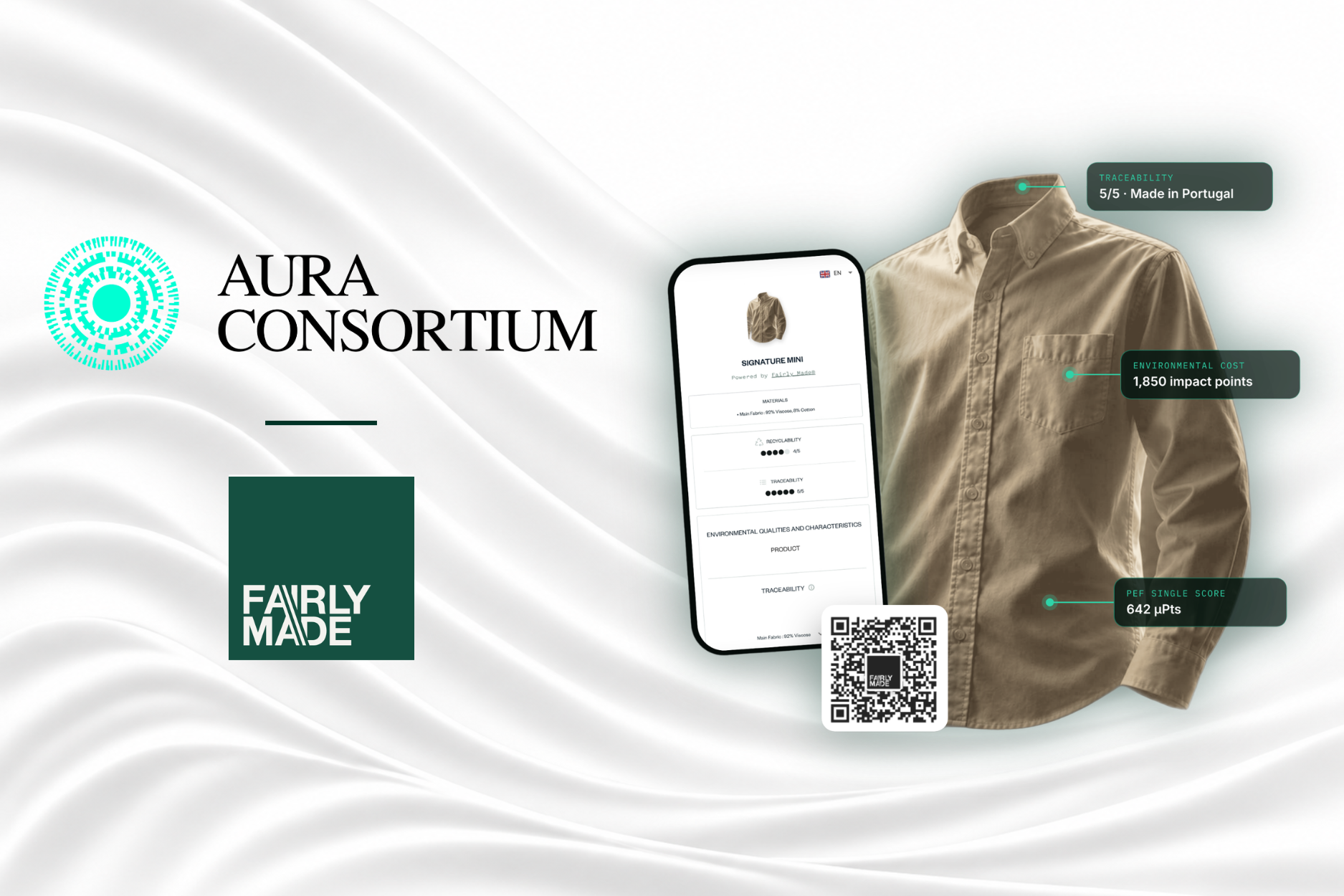
Through this strategic partnership, brands can connect Fairly Made’s traceability and environmental impact data to Aura’s Digital Product Passport (DPP) solution, giving customers a single point of access to key product information while helping brands prepare for upcoming European regulatory requirements. The combined solution also streamlines compliance workflows and simplifies the flow of product and impact data across brand systems.
Fairly Made data integrated directly into Aura’s DPP solution
Under the partnership, Fairly Made’s supply chain mapping and environmental impact data are retrieved, matched to the relevant products and displayed directly in the DPPs. This integration eliminates the need for manual data re-entry and reduces duplication across systems, making digital passports easier to create and manage. By creating a continuous data flow between the two solutions, brands can more easily maintain consistent product information, support regulatory reporting and update DPP content as requirements evolve.
Another Tomorrow: the first real-world use case
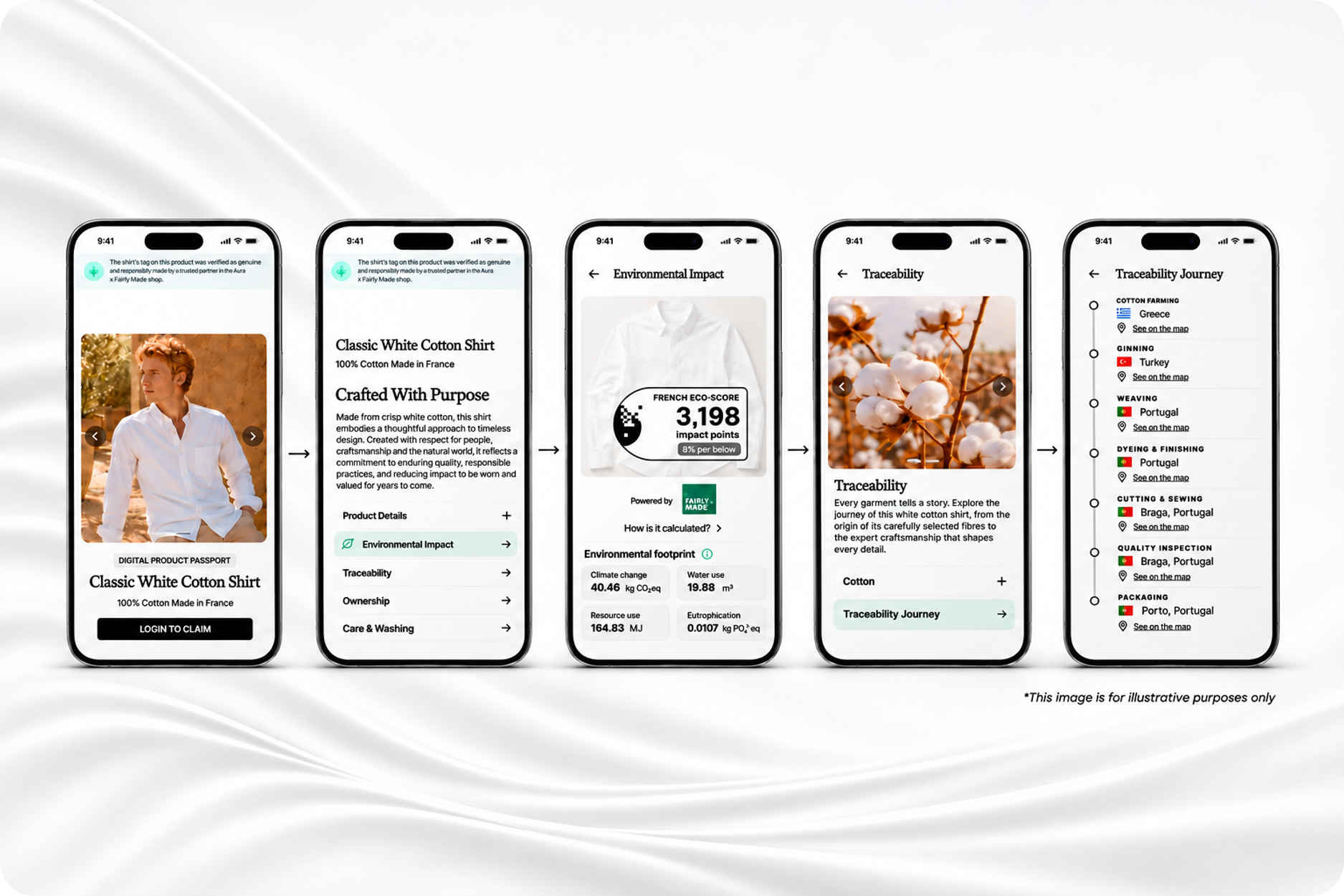
Beginning in Q4 2026, sustainable luxury fashion brand Another Tomorrow, an Aura member brand, will roll out a new generation of DPPs incorporating Fairly Made’s environmental impact data.
By scanning the product label, customers will access a single experience combining environmental information with additional content and services, such as a certificate of ownership and the product’s story.
Preparing for European regulatory requirements
Demand for environmental information about products is growing across Europe. At EU level, the Ecodesign for Sustainable Products Regulation (ESPR), in force since 2024, provides for the introduction of digital product passports, with textiles expected to be among the product categories covered.
In France, the regulated environmental-cost display for clothing – often referred to as the French textile Eco-score – has applied since October 2026. Brands may voluntarily calculate and display a product’s environmental cost in impact points. When they do, the calculation, declaration and presentation must follow the methodology established by the French regulatory framework.
By connecting Fairly Made’s data to Aura’s DPP solution, brands can build on their existing systems, reduce manual data transfers and duplicate data collection, accelerate passport creation and better prepare for evolving regulatory requirements.
Tangible benefits for brands and consumers
- Direct access to traceability and environmental impact data through the DPP;
- Better preparation for the ESPR and France’s textile environmental-cost framework;
- A clearer connection between the supply chain and the information provided to consumers;
- Fewer manual data transfers and less duplication across systems;
- Simpler, faster and more efficient DPP creation and management
- Greater transparency, with data linked to each product’s digital identity.